

If you are experiencing an electric shock while using your treadmill, you might be asking yourself, “Why does my treadmill shock me in 2026 ?” This problem is more common than many home gym users realize. A treadmill electric shock can range from a minor static zap to a serious electrical safety issue that should never be ignored.
In most cases, treadmill shocks are caused by treadmill static electricity, but sometimes they indicate grounding problems, wiring faults, or other home gym electrical issues. Understanding the exact cause is essential for protecting both your safety and your equipment.
This guide explains the tWhy does my treadmill shock me in causes, contributing factors, health risks, and expert-approved solutions to help you avoid treadmill shock safely and permanently.
Why Why does my treadmill shock me?
A treadmill shocks you when electrical or static charge discharges through your body, usually when you touch metal parts such as the handrails or console. There are two main types of treadmill shocks: static electricity discharge and real electrical shock. Knowing the difference helps determine how serious the issue is.
Read More : Best Alternative Treadmill 2026
1. Treadmill Static Electricity (Most Common Cause)
The most common answer to Why does my treadmill shock me is treadmill static electricity. Static electricity builds up due to friction between the treadmill belt and deck as you walk or run.
Static buildup is more likely when:
-
Indoor humidity is low
-
The treadmill is placed on carpeted flooring
-
The belt or deck is worn
-
Air conditioning or winter air dries the environment
When the static charge becomes strong enough, it discharges suddenly when you touch a metal surface, creating a shock sensation.
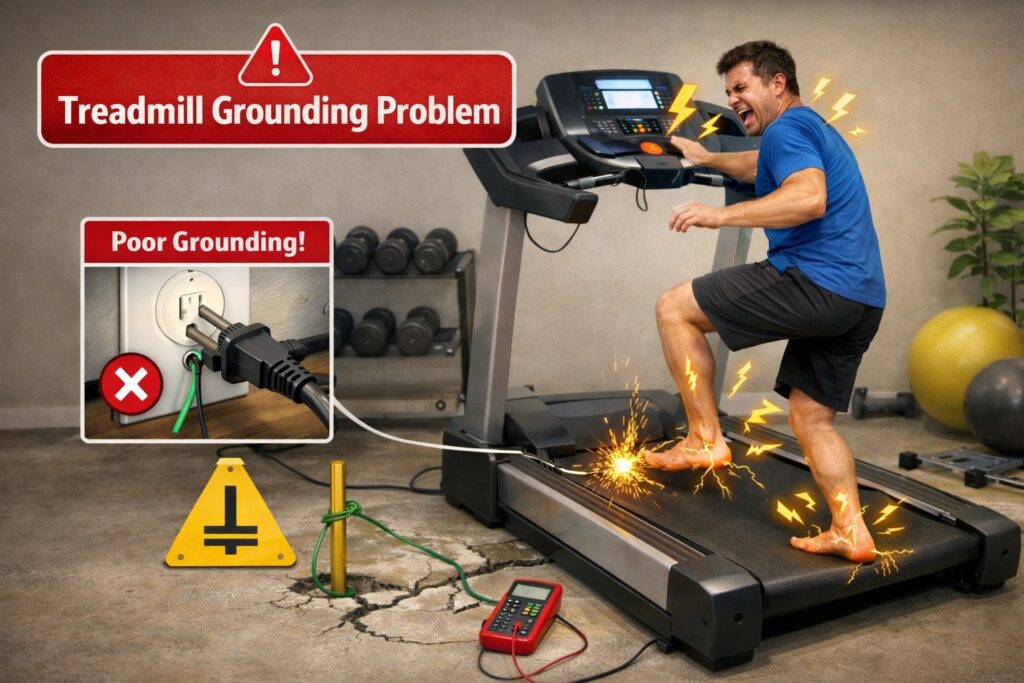
2. Treadmill Grounding Problem
A treadmill grounding problem occurs when the treadmill is not properly connected to a grounded electrical outlet. Grounding allows excess electrical charge to flow safely into the ground.
Signs of grounding issues include:
-
Stronger-than-usual shocks
-
Tingling sensations that last longer
-
Repeated shocks during every workout
Improper grounding is a serious treadmill electrical safety concern and should be fixed immediately.
3. Faulty Wiring or Internal Electrical Issues
Damaged wiring, loose connections, or worn electrical components can cause real electric shock from a treadmill. Unlike static discharge, these shocks can be painful and dangerous.
If shocks feel intense or cause pain, stop using the treadmill and have it inspected by a qualified technician.
4. Moisture and Sweat Exposure
Moisture increases electrical conductivity. Sweat on your hands, damp shoes, or moisture on the treadmill surface can make static shocks feel stronger and increase risk.
5. Worn Belt or Deck Components
A worn treadmill belt or deck creates more friction, which increases static electricity buildup. Older treadmills or machines that lack regular maintenance are more likely to cause shocks.
6. Treadmill Power Surge
A treadmill power surge caused by unstable electricity can damage internal electronics. This damage may result in abnormal electrical behavior, including unexpected shocks.
7. Home Gym Electrical Issues
Unstable voltage, overloaded circuits, poor household wiring, or incorrect outlets are common home gym electrical issues that can contribute to treadmill electric shock problems.
Factors That Increase Treadmill Shock Risk
Several environmental and personal factors make treadmill shocks more likely:
Low Humidity Levels
Dry air allows static electricity to build up more easily.
Flooring Type
Carpeted floors increase friction and static discharge compared to rubber or hardwood surfaces.
Clothing Material
Synthetic fabrics such as polyester and nylon generate more static electricity than natural fibers.
User Body Chemistry
Some individuals naturally accumulate static charge more easily than others.
Poor Maintenance
Lack of lubrication, dust buildup, and worn components increase friction and static generation.
How to Avoid Treadmill Shock (Effective Solutions)
The following steps can significantly reduce or eliminate treadmill shocks and improve overall treadmill electrical safety.

Use an Anti Static Treadmill Mat
An anti static treadmill mat helps dissipate static electricity, improves grounding, and protects your flooring.
Increase Room Humidity
Maintain indoor humidity between 40–60 percent using a humidifier to reduce static buildup.
Ensure Proper Grounding
Plug the treadmill directly into a grounded wall outlet. Avoid extension cords and use a surge protector if recommended by the manufacturer.
Wear Proper Footwear
Rubber-soled athletic shoes reduce static discharge and improve safety. Avoid using the treadmill barefoot.
Choose Appropriate Clothing
Wear cotton or natural fabrics instead of synthetic materials during workouts.
Follow Essential Treadmill Maintenance Tips
-
Lubricate the treadmill belt regularly
-
Clean dust and debris from components
-
Inspect power cords and plugs
-
Replace worn belts or decks when necessary
Seek Professional Inspection
If shocks continue despite these steps, consult a certified technician to inspect wiring and grounding.
Are Treadmill Electric Shocks Dangerous?
Most treadmill shocks are harmless static discharges. However, persistent or intense treadmill electric shock can pose real safety risks.
Possible effects include:
-
Discomfort or pain
-
Loss of balance and falls
-
Anxiety during workouts
-
Reduced treadmill usage
In rare cases, serious electrical shocks may cause burns, muscle spasms, nerve damage, or heart rhythm disturbances. Any painful or repeated shock should be treated as a serious warning sign.
Final Thoughts
If you are wondering why does my treadmill shock me, the issue is usually related to static electricity, grounding problems, or poor maintenance. While many shocks are minor, ignoring repeated treadmill electric shock incidents can lead to serious safety concerns.
By improving grounding, using an anti static treadmill mat, maintaining proper humidity, and following basic treadmill maintenance tips, you can safely avoid treadmill shock and enjoy worry-free workouts at home.
Your safety should always come first. If the problem persists, stop using the treadmill and consult a professional immediately.
